Complete Guide to Dunnage for Heavy Loads
Article
Updated:
< 2 min read
Share On:

Why Dunnage Matters for Heavy Loads
Every year, companies across construction, metals, furniture, and logistics absorb significant losses from cargo that arrives damaged; crushed corners, scratched surfaces, shifted loads, bent profiles. In most cases, the root cause is not the transport itself. It is inadequate dunnage.
Dunnage for heavy loads is the foundation of safe, efficient cargo handling. Choose the wrong material and you are over-engineering the solution, adding unnecessary weight, cost, and disposal effort. Choose the right one and your loads arrive intact, your teams handle materials more safely, and your sustainability targets stay on track.
This guide covers what dunnage is, the main material types and their trade-offs, how to apply it correctly, and how to select the best solution for your application including a new generation of water-resistant corrugated pads that is increasingly replacing wood, steel, and plastic in load-bearing applications.
What Is Dunnage?
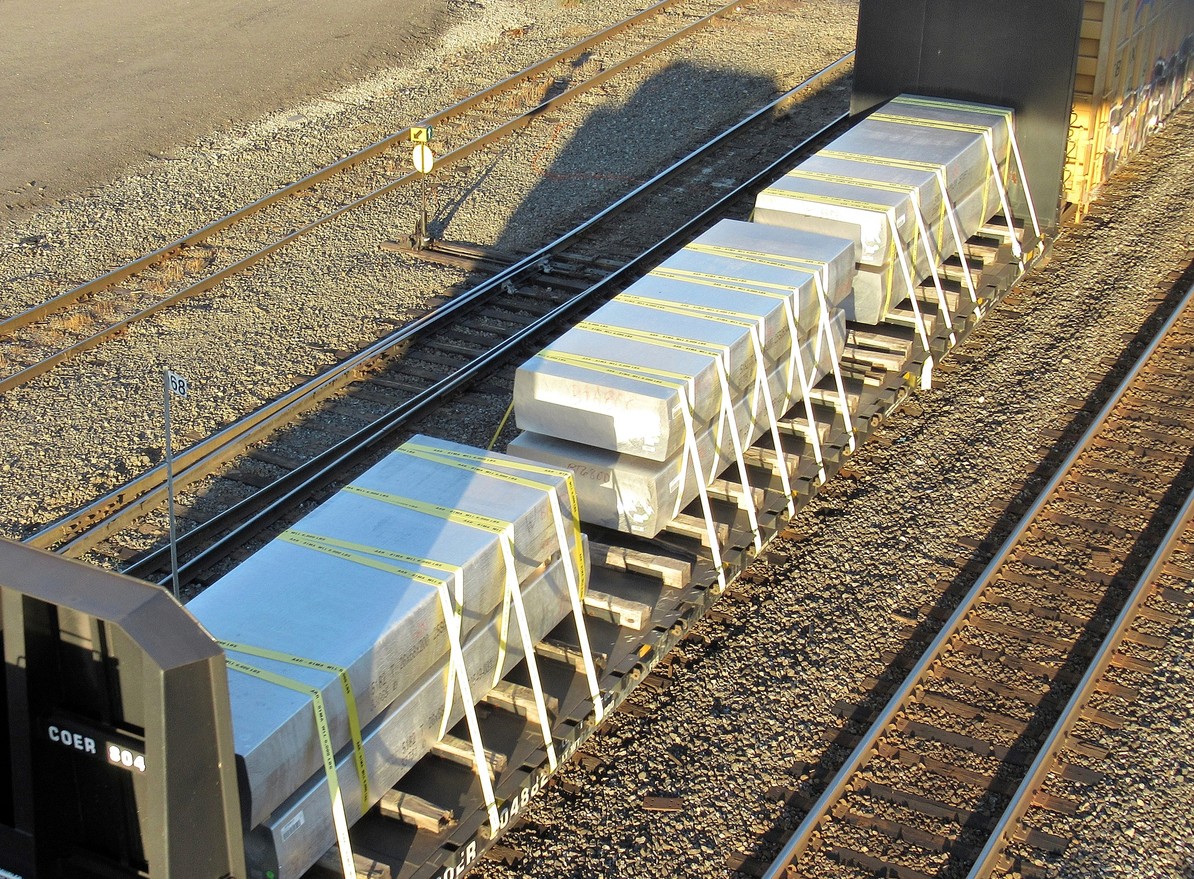
Dunnage is any material placed under, between, or around cargo to protect it during transport, storage, or handling. The word has maritime origins, historically, loose wooden boards were placed in ships' holds to keep goods above bilge water, but today it applies across road, rail, sea, and warehouse environments.
For heavy loads, dunnage serves three core functions:
Protection from damage: acting as a buffer between goods and the transport surface, or between individual units, to prevent impact, abrasion, and contamination
Load stabilisation: preventing goods from shifting, tipping, or rolling during transit, protecting both the cargo and the people handling it
Weight distribution: spreading the load evenly across the transport platform or between layers, reducing point-load stress on goods or vehicle
Heavy-Load Dunnage vs. General Packaging Dunnage
In parcel shipping and e-commerce, "dunnage" typically refers to void-fill materials such as bubble wrap, air pillows, foam peanuts, designed for lightweight, fragile goods in enclosed boxes.
Heavy-load dunnage is structurally different. It must withstand compressive forces of several tonnes and maintain integrity in challenging environments: humidity, outdoor staging, temperature variation, and repeated forklift handling.
What Types of Dunnage Are Used for Heavy Loads?
There are four main dunnage materials used in heavy-load applications. Each has a distinct profile of strengths and limitations.
Wood
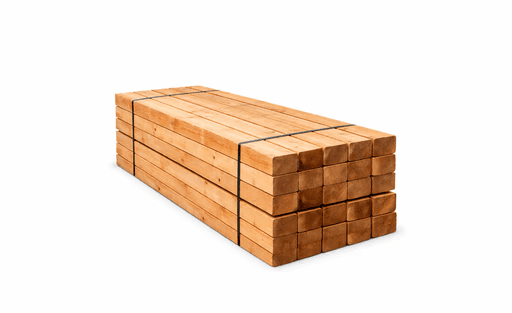
The most traditional dunnage material, still widely used across flatbed, open-deck, and industrial shipping.
Strengths:
High compressive strength and good shock absorption
Easy to cut and customise on-site
Low upfront cost
Limitations:
Heavy and ergonomically demanding to handle
Absorbs moisture (can warp, split, or harbour mould in humid conditions)
Inconsistent quality due to knots and natural defects
Difficult and costly to recycle when contaminated
Subject to phytosanitary regulations for export (ISPM 15 treatment required)
Plastic
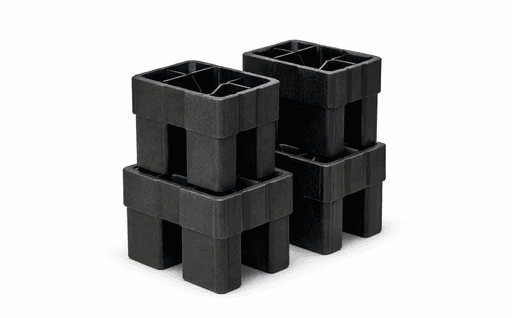
Solid plastic dunnage such as blocks, planks, or custom profiles.
Strengths:
Resistant to moisture and chemicals
Can be returned and reused where logistics permit
Limitations:
Risk of deformation under sustained heavy loads
Heavier than paper-based alternatives
Fossil-based material with increasing regulatory scrutiny (EU PPWR)
Limited end-of-life recyclability in practice
Higher upfront cost; return logistics needed to realise reuse value
Metal / Steel
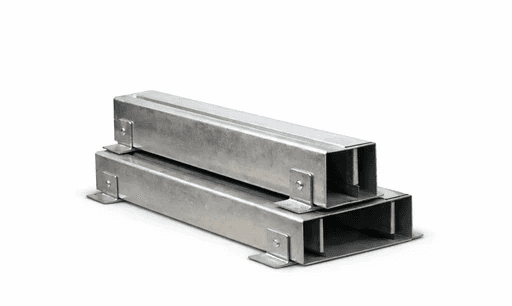
Used in the most demanding heavy industrial applications where extreme point loads are involved.
Strengths:
Exceptional load-bearing capacity
Long service life when maintained
Limitations:
Very heavy with significant ergonomic risk for handling teams
High CO₂ footprint in production and transport
Often over-specified for actual load requirements
Requires reverse logistics to recover value at end of life
Corrugated Pads (Corrugated Dunnage)
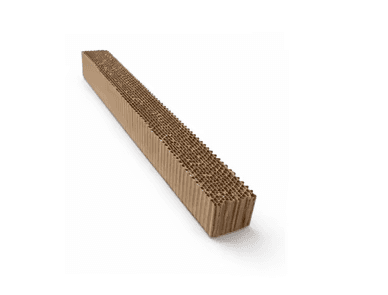
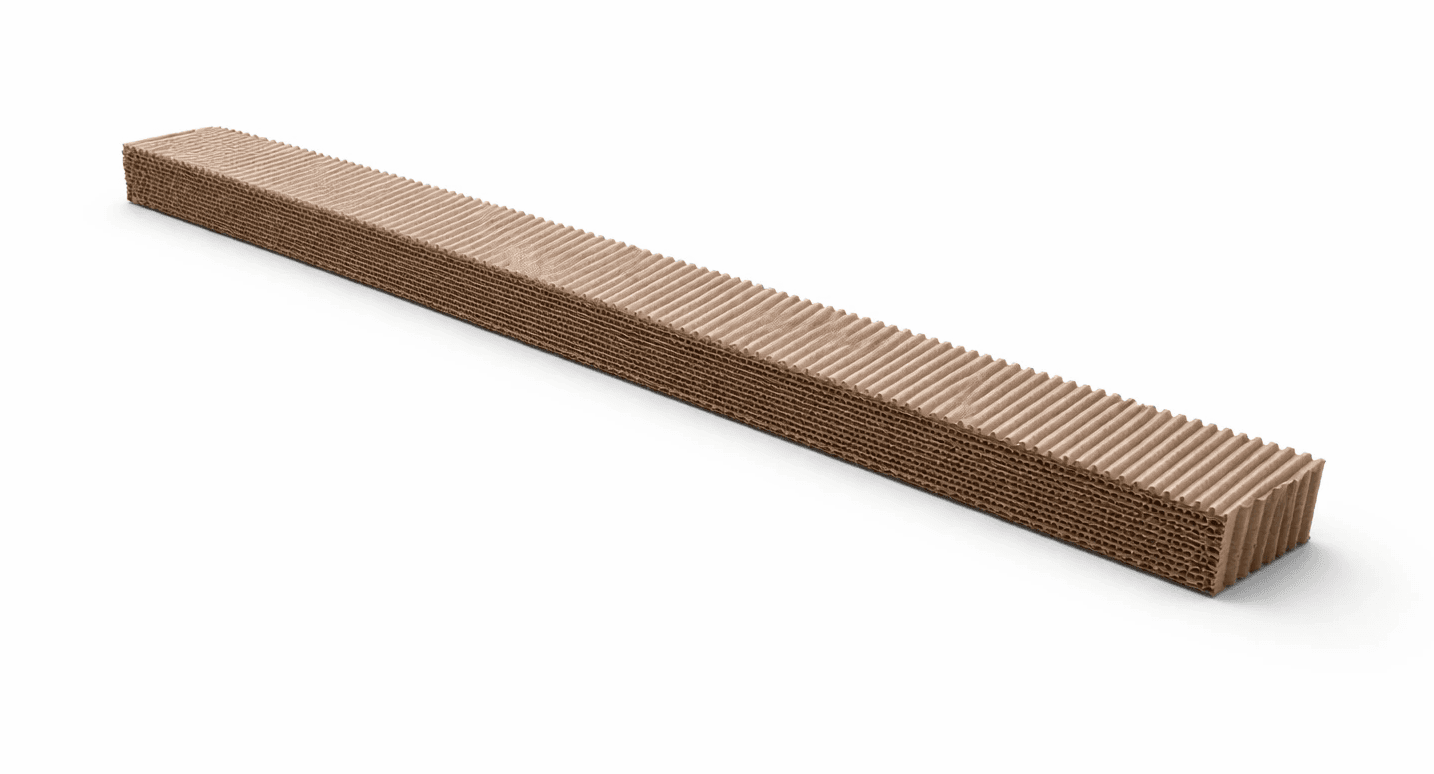
A purpose-engineered alternative to traditional dunnage materials made from high-density corrugated cardboard with a water-resistant coating, designed specifically for structural load-bearing applications.
Strengths:
High compressive strength suitable for heavy stacked goods
Water-resistant coating maintains structural integrity in humid environments. The coating also increases structural strength by approximately 30%.
Very lightweight, significantly reduces handling strain and transport weight
100% recyclable in the standard paper stream, no separation needed
FSC®-certified fibre for responsible sourcing (FSC-C208912)
Custom-engineered to exact dimensions for each application
No return logistics required
Limitations:
Not suited to standing water or continuous direct rainfall
Not the right choice for extreme point loads requiring metal-grade capacity
→ Read more about corrugated pads here
→ Request product samples here
Quick Comparison: Dunnage Materials for Heavy Loads
Corrugated Pads | Wood | Plastic | Metal / Steel | |
|---|---|---|---|---|
Load-bearing capacity | ✅ High | ✅ High | ⚠️ Medium (risk of deformation under sustained load) | ✅ Very high |
Water resistance | ✅ Good (humid environments) | ❌ Poor | ✅ Good | ✅ Good |
Weight | ✅ Very light | ⚠️ Heavy | ⚠️ Medium-heavy | ❌ Very heavy |
Recyclability | ✅ Standard paper stream | ⚠️ Difficult if contaminated | ❌ Limited in practice | ⚠️ Energy-intensive |
Ergonomics | ✅ Easy to handle | ⚠️ Poor | ⚠️ Poor | ❌ Poor |
Customisability | ✅ Exact dimensions | ⚠️ Manual cutting | ⚠️ Limited profiles | ⚠️ Limited |
Regulatory outlook (EU) | ✅ Favourable (PPWR) | ⚠️ Neutral | ❌ Increasing scrutiny | ⚠️ Neutral |
Best Practices for Using Dunnage in Heavy Load Transport
Getting the material right is only half the equation. Incorrectly placed dunnage can be as ineffective as none at all. Here are the key principles for heavy-load applications:
Placement Rules
Align dunnage with your lashings. Dunnage placed between lashing points reduces restraint effectiveness. Position it so lashings pass directly over it, increasing friction and contact area.
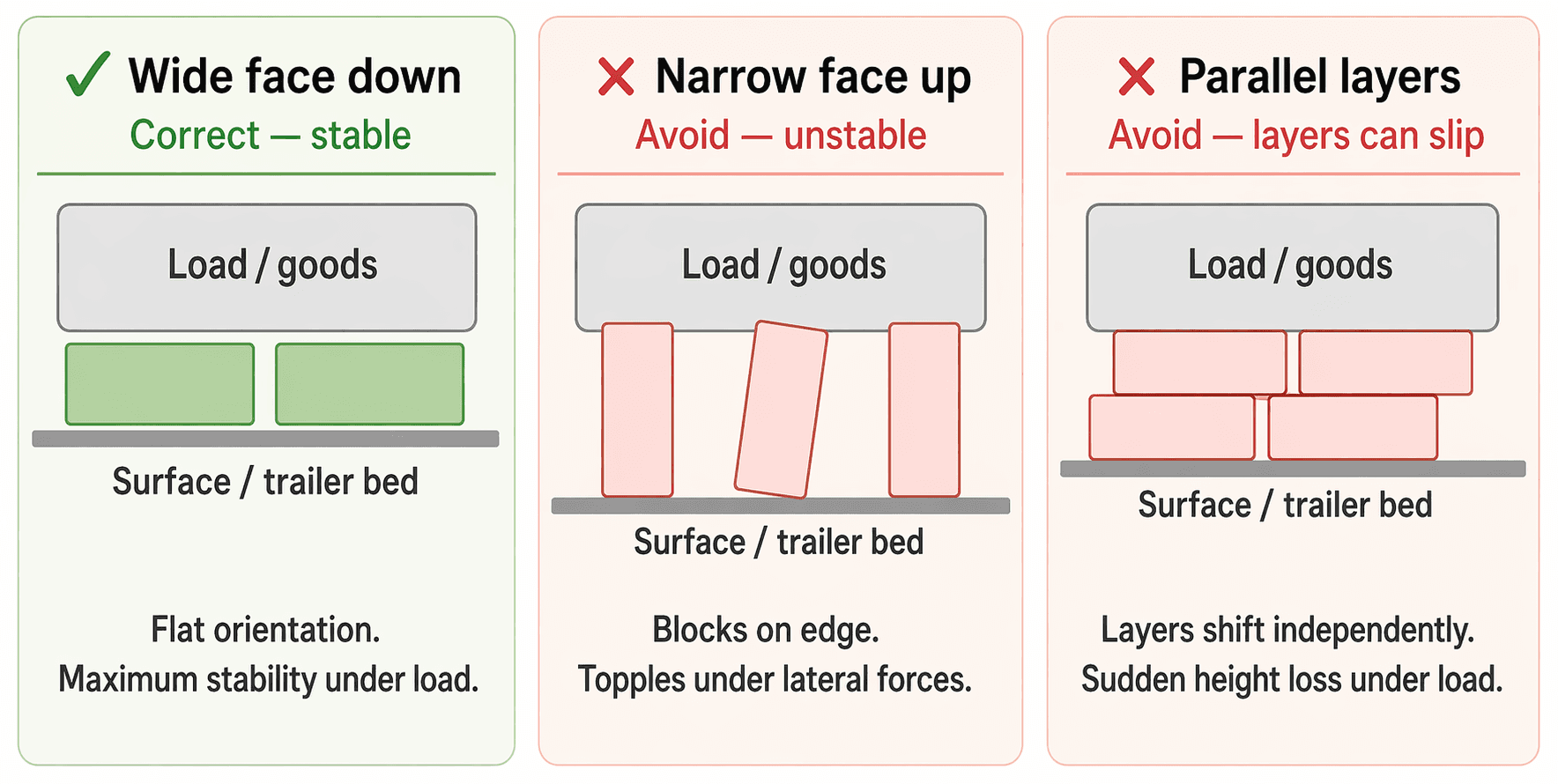
Never stack pieces in parallel layers. Layered dunnage can shift independently under load forces, causing sudden loss of height and lashing tension.
Never place dunnage on its narrow face. A block standing on its edge has minimal contact footprint and will topple under lateral forces. Always orient on the wide face.
Matching Dunnage to Load Type
Load type | Recommended approach |
|---|---|
Flat sheet goods (steel, glass, panels) | Full-width dunnage at regular intervals; align with load edges |
Cylindrical loads (pipes, coils, rolls) | Notched or cradle-configured dunnage to prevent rolling |
Palletised stacks | Dunnage between layers to distribute inter-layer compression |
Mixed loads in containers | Dunnage combined with inflatable bags to fill void spaces |
What Industries Use Dunnage for Heavy Loads?
Corrugated pads and other heavy-load dunnage are used across a wide range of sectors. Requirements such as load weight, environment, handling frequency, and sustainability obligations vary by industry.
Construction & Building Materials
Typical goods: Steel beams, concrete panels, roofing materials, cladding, prefabricated elements, stone slabs
Outdoor staging and humid site conditions are common, making water resistance an important selection criterion. Corrugated pads are well suited for repetitive, high-volume flows and applications with ergonomic requirements.
Metals and Heavy Industry
Typical goods: Steel coils, flat bar, tube and pipe, castings, fabricated assemblies
Preventing metal-to-metal contact is critical to avoid marking and corrosion. High handling frequency makes lightweight dunnage a significant ergonomic and cost advantage.
Furniture and Interiors
Typical goods: Flat-pack components, glass table tops, upholstered frames, kitchen cabinets, solid wood panels
Volume is typically high and goods are surface-sensitive. Lightweight, custom-dimensioned corrugated pads are particularly well suited.
Logistics and Export Packaging
Typical goods: Palletised industrial goods, machinery components, mixed container loads
Recyclability and compliance with EU packaging regulations are key considerations. Corrugated pads simplify waste handling at the point of delivery.
How to Choose the Right Dunnage?
Use the criteria below to guide your selection.
1. Load weight and compression requirements The dunnage must support the full compressive load without deforming. This is the non-negotiable baseline.
2. Environmental conditions
Humid environments or cold storage: wood weakens; corrugated pads with water-resistant coating maintain performance
Outdoor or exposed staging: water resistance is essential; corrugated pads or metal are appropriate
Standing water or continuous direct rainfall: use plastic or metal — no paper-based material is suited
3. Handling frequency and ergonomics
High-frequency applications make the weight of the dunnage material significant. Lightweight corrugated pads reduce handling strain substantially compared to wood or metal.
4. Sustainability and regulatory compliance
The EU Packaging and Packaging Waste Regulation (PPWR) is increasing pressure on companies to reduce weight and improve recyclability. Paper-based corrugated pads meet this well — recyclable in the standard paper stream with no specialist handling.
5. Customisation requirements
If your loads have specific dimensions or precise height requirements, corrugated pads can be produced to exact specifications. Standard plastic profiles offer limited flexibility; timber requires on-site cutting.
At-a-Glance Decision Guide
If your situation is... | Consider... |
|---|---|
Heavy loads, indoor environment, high volume | ⭐ Corrugated pads |
Outdoor exposure, humidity, no standing water | ⭐ Corrugated pads (water-resistant) |
Repetitive flows with recyclability and handling priorities | ⭐ Corrugated pads |
Extreme point loads beyond standard industrial range | Metal / steel dunnage |
Standing water or continuous direct rainfall | ❌ Not suitable for corrugated pads — use plastic or metal dunnage |
The Future of Dunnage: Stronger, Lighter, More Sustainable
The right dunnage protects goods, keeps teams safe, and, increasingly, supports regulatory and sustainability requirements. Traditional materials like wood, steel, and plastic have served the industry well, but they carry real trade-offs: weight, ergonomic risk, recycling difficulty, and growing regulatory pressure.
For most heavy-load applications, corrugated pads offer a better combination: water-resistant, load-bearing, lightweight, and fully recyclable.
Ready to improve your load stability and reduce environmental impact?
Explore our corrugated dunnage solutions or contact our team to discuss the right set-up for your operations.
About Ryleon
Ryleon is a European group providing sustainable packaging and security solutions that protect physical goods throughout transport and handling. The group specialises in fibre-based protective packaging and tamper-evident solutions, helping customers meet performance, regulatory, and sustainability requirements.
Protecting what matters – our customers’ products and the world we live in.